
Websites are often the first interaction users have with a brand. If that experience is confusing, frustrating, or impossible to use, visitors won’t stay long. That’s why usability and accessibility in web design are no longer optional. When people visit your website, they expect it to work. They want to find information easily and understand what they’re seeing. That’s where usability and acessibility come in. While they’re closely related, they solve slightly different problems. Together, they can make a website great and give users the experience they want.
What Is Usability?
Usability is about how easy a website is to use. A usable website helps visitors accomplish their goals quickly and without confusion.
Key elements of usability include:
- Clear navigation so users always know where they are and where to go next
- Consistent layouts that reduce the learning curve
- Readable content with logical structure and hierarchy
- Efficient interactions, such as simple forms and obvious calls to action
Good usability benefits everyone. Whether someone is visiting your site for the first time or returning for the tenth, a usable design saves time and builds trust.
What Is Accessibility?
Accessibility ensures that all people can understand, navigate, and interact with your website. This includes users who rely on things like screen readers or other assistive technologies.
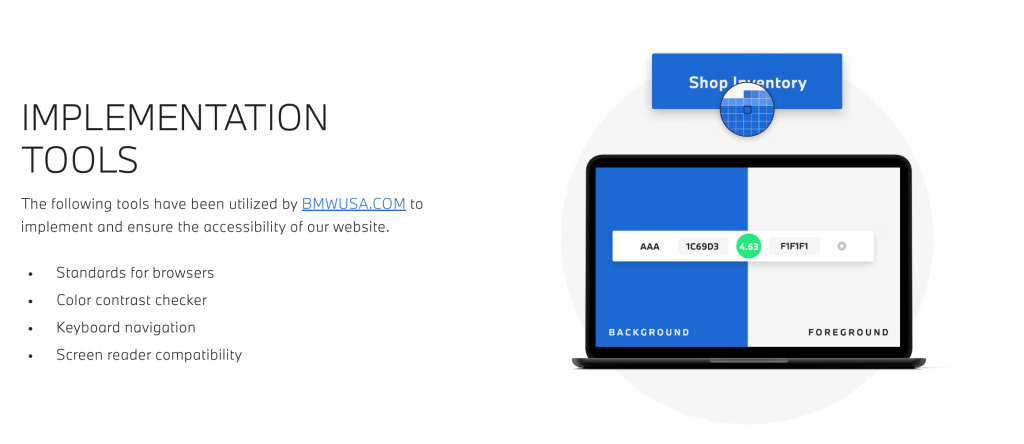
(Graphic titled Implementation Tools showing accessibility tools and a laptop illustrating color contrast checking)
Accessibility considerations include:
- Text alternatives for images
- Sufficient color contrast for readability
- Keyboard-friendly navigation without relying on a mouse
- Clear labels and instructions for forms and inputs
- Readable content that’s easy for all to understand
Accessibility is not just about compliance it’s about respecting the diverse ways people experience the web and making sure that everyone can access and use your website the way it was intended.
Why It Matters for Your Website
Usability and accessibility overlap a lot when making a website. Improving accessibility often improves usability for all users.For example, clear headings support screen reader users and make content easier to scan for everyone. When accessibility is treated as part of usability the result is a smoother experience for a broader audience.
Focusing on usability and accessibility is the best thing for all businesses.
Benefits include:
- Wider audience reach, including millions of users with disabilities
- Better SEO as search engines favor clear structure and readable content
- Higher engagement and conversions, thanks to reduced friction
- Stronger brand reputation, showing inclusivity and care for users
In many regions, accessibility is also a legal requirement, making proactive design even more important.
Final Thoughts
A website that’s usable but not accessible leaves people behind. A website that’s accessible but hard to use will frustrate users. The best digital experiences embrace both.
By designing with usability and acessibility in mind from the start, you create a website that’s functional, welcoming, inclusive, and genuinely helpful to everyone who visits.
Sources
https://www.audioeye.com/post/accessible-website-design-examples
https://www.browserstack.com/guide/accessible-website-examples
Leave a Reply